The phrase ‘root canal’ makes a lot of people wince, usually from stories rather than experience. In practice it is a routine way to rescue a tooth whose inner tissue — the pulp — has become infected or inflamed, often after a deep cavity, a crack, or repeated dental work.
Inside every tooth is soft tissue containing nerves and blood vessels. When decay or damage reaches it, that tissue can become infected. Left alone, the infection can spread, cause an abscess, and eventually cost you the tooth. A root canal removes the infected tissue while keeping the natural tooth in place.
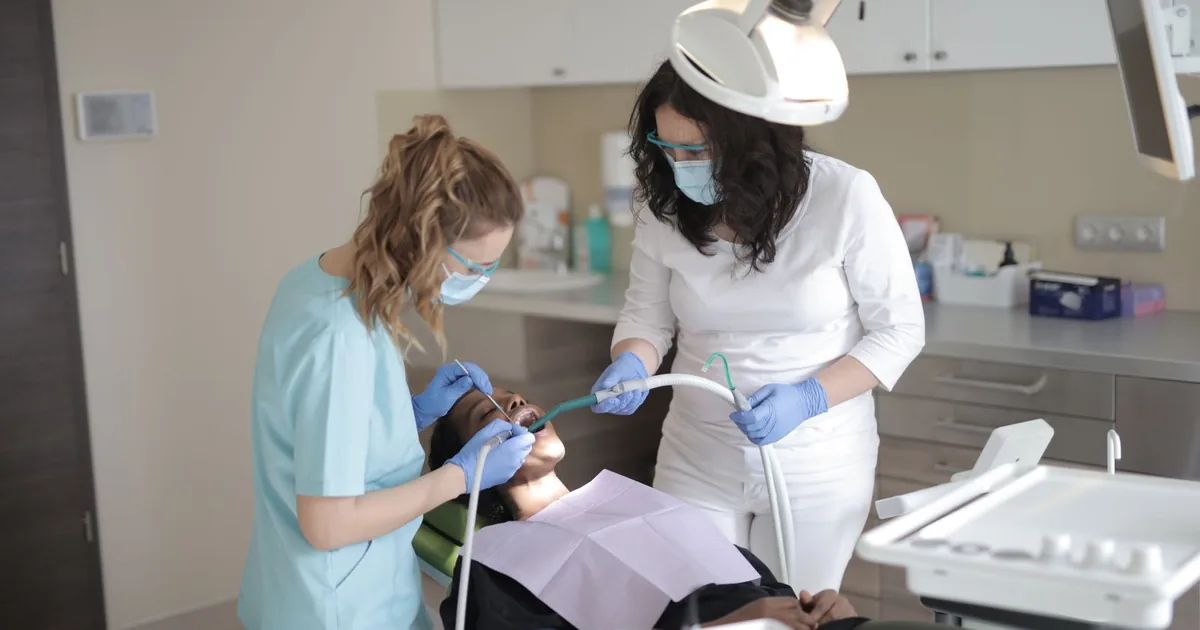
The area is numbed thoroughly first — modern anaesthesia means the procedure itself feels much like having a filling. The dentist removes the infected tissue, cleans and shapes the inside of the tooth, and seals it. A tooth that has had a root canal is often capped with a crown afterwards to protect it, since it can become more brittle.
Most root canals are completed in one to three visits. A single sitting is common when the infection is contained and the canals are straightforward; molars with multiple curved canals, or teeth with long-standing infection, often need two or three shorter visits so the tooth can be medicated and settled between them. Your dentist should tell you the expected number after looking at the X-ray — and explain if it changes. We answer this in more detail in our FAQ on how many sittings a root canal takes.
A single-visit root canal on a front tooth is often done in forty-five minutes to an hour. A molar commonly takes ninety minutes to two hours, and yes, two hours is entirely normal rather than a sign something has gone wrong. Long-standing infections are often treated across two or three shorter visits so the tooth can be medicated and settled in between.
The difficulty is mostly anatomy. Front teeth usually have one straight canal. Premolars have one or two. Molars have three or four, and upper first and second molars are the hardest teeth in the mouth to treat well — they frequently carry an extra, very fine canal in the palatal root that is easy to miss entirely. A missed canal is one of the commonest reasons a root canal fails later. Curved canals, canals narrowed by years of the tooth defending itself, and teeth that have been treated before are the other things that make a case slow.
This is worth understanding when comparing quotes. A molar with four canals is not the same piece of work as an incisor with one, and a price that does not distinguish between them is not really a price.
People often assume the drill does the work. It does not. The files shape the canal, but what removes the bacteria is the irrigation — principally sodium hypochlorite, which dissolves infected tissue and kills bacteria in the parts of the canal no instrument can physically touch. Canals are not simple tubes; they have side branches and irregularities, and the fluid is what reaches them.
Where an infection is long-standing, a dressing of calcium hydroxide may be sealed inside between visits to continue working on what the irrigation has not reached. The final seal matters just as much: a canal that has been perfectly cleaned and then poorly sealed will simply become infected again from the top down.
Cost depends mainly on which tooth it is — a front tooth has one canal, a molar can have four — on whether an earlier root canal is being redone, and on the crown chosen afterwards. We set out the figures and what drives them in our guide to root canal cost in Indirapuram, including why the crown is a separate line on the bill and why you should ask for the total for the whole sequence.
None of these guarantees a root canal is needed — but each is a reason to get the tooth examined rather than wait. Importantly, if the pain suddenly stops on its own, that can mean the nerve has died, not that the problem is gone; the infection can continue silently.
This is the question most people arrive with, and it deserves a straight answer rather than reassurance. Whether a root canal can be avoided depends entirely on how far the damage has gone, and that line is not a matter of opinion.
If the pulp is inflamed but still healthy enough to recover — usually a deep cavity that has come close to the nerve without infecting it — then removing the decay and placing a filling, sometimes with a protective liner over the nerve, can be enough. The tooth settles and keeps its living pulp. This works only when the pulp is still viable, and your dentist judges that from your symptoms and the X-ray.
Once the pulp is infected or has died, there is no filling that will fix it. A filling seals the outside of a tooth; it does nothing to the infected tissue sealed inside. Putting a filling over a dead pulp traps the infection and it continues into the bone at the root tip. At that point the honest choice is between a root canal and removing the tooth — those are the two options, and anything else is delay.
The signal that the line has been crossed is usually one of these: pain that lingers well after something hot or cold, pain that wakes you at night, a tooth that has darkened, swelling or a small bump on the gum, or pain when biting that keeps returning to the same tooth. Worth knowing: if severe pain stops on its own, that often means the nerve has died rather than recovered. The infection carries on silently, and people frequently return months later with an abscess, surprised, because the pain went away.
Dentists do try to avoid root canals, and the reason is straightforward: a tooth with a living pulp is better than a tooth without one. A vital tooth still senses temperature and pressure, keeps its natural moisture, and is less brittle. A root-treated tooth is a rescued tooth, not a restored one.
That is why a dentist who catches decay early will fill it, and why check-ups matter more than they sound like they do. The root canal is what is left when that opportunity has passed. If a dentist recommends one, it is generally because the alternatives have already gone.
Clove oil, salt-water rinses, garlic and oil pulling come up constantly in searches, and it is worth being clear about what they do. Clove oil contains eugenol and can genuinely dull nerve pain for a while. Salt water can ease the soreness of an inflamed gum. Neither reaches the inside of a tooth.
An infected pulp sits inside a sealed chamber with no blood supply left to carry anything to it — which is also why antibiotics alone do not cure it. Nothing rinsed, rubbed or swallowed can sterilise that space. Only opening the tooth and cleaning the canals does. Home remedies can make you comfortable enough to postpone treatment, and that is exactly the risk: the pain settles, the infection does not, and a tooth that could have been saved with a root canal becomes an abscess, or an extraction.
If you are using something at home to get through a night before an appointment, that is entirely reasonable. Using it instead of an appointment is what costs teeth.
The only genuine alternative to a root canal on an infected tooth is taking the tooth out. That is sometimes the right decision — a tooth split below the gumline, or one with too little structure left to restore, is not worth saving.
But extraction is rarely the end of it. A gap changes how you bite. The teeth on either side drift, the opposing tooth over-erupts into the space, and the bone that held the root begins to resorb. Replacing the tooth then means a bridge, which involves cutting down two healthy neighbours, or an implant, which costs several times what the root canal would have. Keeping a restorable natural tooth is almost always both the cheaper and the better decision, which is the opposite of how it feels at the time.
“Better to just pull it out.” Extraction sounds simpler, but a missing tooth shifts your bite and usually leads to a bridge or implant later — more treatment, not less. Keeping a restorable natural tooth is almost always the better first choice.
“The treatment hurts more than the toothache.” With thorough modern anaesthesia, most patients compare the sitting to a long filling. The toothache that brought them in is usually the worst part of the whole episode — our FAQ on whether root canals actually hurt covers this honestly.
“If I can bear the pain, I can skip it.” An untreated infected tooth does not stay still — abscess, bone loss around the root, and spreading infection are the usual path. Bearing the pain postpones the treatment and grows the problem.
There is very little to do, which is worth saying plainly, because most people expect there to be more.
Eat beforehand. The appointment can run to two hours and your mouth will be numb for a while afterwards, so arriving hungry is a mistake. Take your usual medication as normal.
Tell the dentist about anything relevant to your health — heart valve problems, a joint replacement, diabetes, blood-thinning medication, pregnancy — and about any antibiotics you have already been given. A course started somewhere else changes what happens on the day.
You do not need to book a day off, arrange a lift, or have someone look after you. This is not surgery in the sense people fear it might be: nothing is cut open, there are no stitches, and the whole treatment is carried out through a small opening in the top of the tooth under local anaesthetic. You drive yourself home afterwards.
One thing genuinely worth mentioning in advance: if you have been in significant pain for several days, say so when you book. A tooth that is acutely inflamed is harder to numb completely, and a dentist who knows that beforehand can plan for it rather than discover it halfway through.
The numbness takes two to four hours to wear off. Do not chew anything until it has — it is easy to bite a numb cheek, lip or tongue hard enough to leave an ulcer that outlasts the tooth trouble. Talking is unaffected: words may feel odd while the lip is numb, but nothing about the treatment changes your speech.
Once the numbness has gone, eat normally, but chew on the other side until the permanent crown or filling is in place. A tooth carrying only a temporary filling is not built for full biting load.
Mild tenderness for a day or two is normal and usually settles with ordinary pain relief. It can last up to a week and should be decreasing throughout, not building. Keep up gentle brushing and flossing around the tooth from that same evening; the area needs to stay clean.
If it aches at night, an extra pillow genuinely helps — lying flat raises the pressure at the root tip, which is also why toothache is classically worse in bed. Taking your usual painkiller before you go to sleep, rather than at three in the morning when it has already woken you, is the practical version of that advice.
You do not need rest days. Most people go back to work the same day or the next.
What is not expected: pain that increases after the first two or three days, swelling of the gum or face, a temporary filling that comes out, or a fever. Any of those is a reason to ring the clinic rather than wait and see.
Most root-treated teeth are still doing their job a decade later, and many last for life. When one does fail, it is worth knowing what actually failed, because it is rarely the root canal itself.
The commonest cause is fracture. A root-treated tooth has lost structure and no longer has a living blood supply, so it is more brittle — and a back tooth left without a crown is the classic case. Cracks that run below the gumline usually cannot be repaired.
The second is new decay. A root-treated tooth can absolutely still rot: the treatment sterilises the inside, it does nothing to protect the outside, and the remaining tooth decays like any other. The difference is that there is no nerve left to warn you, so it progresses without pain until it reaches the point of no return. This is precisely why a root-treated tooth still needs check-ups.
The third is re-infection, when bacteria find their way back into the canal system — through a leaking filling or crown margin, or into a canal that was missed the first time. If it happens, retreatment is often possible: the existing filling material is removed, the canals re-cleaned, and the tooth resealed.
If root canals keep failing across several of your teeth, that is worth investigating as a pattern rather than as bad luck. Teeth left without crowns, restorations that have been leaking for years, heavy grinding, gum disease and poorly controlled diabetes all raise the failure rate, and all of them are addressable.
Nothing exotic is required, and there is nothing to clean inside the tooth — that space is sealed and stays sealed. What needs care is the outside, and especially the margin where a filling or crown meets the tooth.
Brush twice daily with attention to the gumline, clean between the teeth every day, and chew on the other side until the permanent crown is fitted. Get the crown placed when it is recommended rather than months later; a root-treated back tooth left uncrowned is the single most avoidable way to lose one. And keep the six-monthly check, because this is a tooth that has permanently lost its ability to tell you something is wrong.
What are the disadvantages of a root canal? There are real ones and they are worth knowing. The tooth loses structure and its blood supply, so it becomes more brittle and a back tooth will usually need a crown — which is a separate cost on top of the treatment. The tooth is never quite the same as a living one. Treatment can fail years later and need redoing. And it takes time, sometimes across more than one visit. Set against that, the alternative is losing the tooth, and everything that follows from a gap.
Which teeth cannot have a root canal? It is less about which tooth in the mouth and more about the state of that particular tooth. A tooth split vertically down through the root cannot be saved. Nor can one with too little sound structure left above the gum to hold a restoration, or one whose supporting bone has already been lost to advanced gum disease. Your dentist works this out from the X-ray and from looking, not from the tooth’s position.
How often do root canals work? Most root-treated teeth serve for many years and a great number last for life. When one does fail, the cause is usually identifiable rather than mysterious: a canal that was missed at the first attempt, a filling or crown that has been leaking at the margin, or a fracture in a tooth left without proper coverage. We have not put a survival percentage here on purpose — the figures quoted around the internet vary widely depending on which teeth were studied and who treated them, and a number that precise would suggest more certainty than exists.
What is a “stage 1” root canal? Not a term dentists use, which is why searching for it gives confusing answers. It usually means one of two things: the first appointment of a treatment being done across two or more visits, or early inflammation of the pulp that has not yet reached the point of needing the full treatment. Ask which one is meant, because the difference matters.
Is there a normal age for a root canal? No. They are most common in adults between about thirty and sixty, simply because decay and old fillings accumulate over time. But children have them on baby teeth — a pulpectomy, which does the same job on a milk tooth — and people well into their seventies and eighties have them too. Age is not the deciding factor; the state of the tooth is.
Is the cap on a root-treated tooth permanent? A crown is fixed rather than removable, so it is permanent in the sense that you cannot take it out. It is not permanent in the sense of lasting forever: a well-made crown commonly lasts ten to fifteen years and often considerably longer, and what usually fails is the tooth underneath rather than the crown itself. Our guide to tooth caps and crowns goes through the materials, the costs and what shortens a crown’s life.
A root canal has a reputation for pain, but for most people the discomfort they arrive with — from the infection — is worse than the treatment that relieves it. Saving a natural tooth is almost always better for your bite and your jaw than losing one. You can read more about how we approach root canal treatment at Kosmoss Dental.
If you have ongoing tooth pain or swelling, it is worth getting the cause identified early. None of this replaces an in-person check-up — every mouth is different, and a quick look often settles what guesswork cannot. If something has been bothering you for more than a few days, it is worth getting it seen early, while it is still simple to treat.
At Kosmoss Dental in Indirapuram, we are happy to talk through what you are noticing and explain the options before anything is decided. Give us a call or drop by the clinic to book a time that suits you.
Author