Dental deep cleaning — also called scaling and root planing — removes hardened tartar and bacterial deposits from below the gumline, where a toothbrush and regular cleaning cannot reach. It is the standard treatment for early to moderate gum disease (periodontitis) and is different from the routine scaling done at a check-up appointment.
If your dentist has recommended it, or if you are researching it before booking, here is a plain account of what happens, how much it hurts, what to expect in the days after, and when your gums will return to normal.
A routine scale and polish cleans the visible surfaces of your teeth and just below the gumline. It takes 20 to 40 minutes and is done every six months.
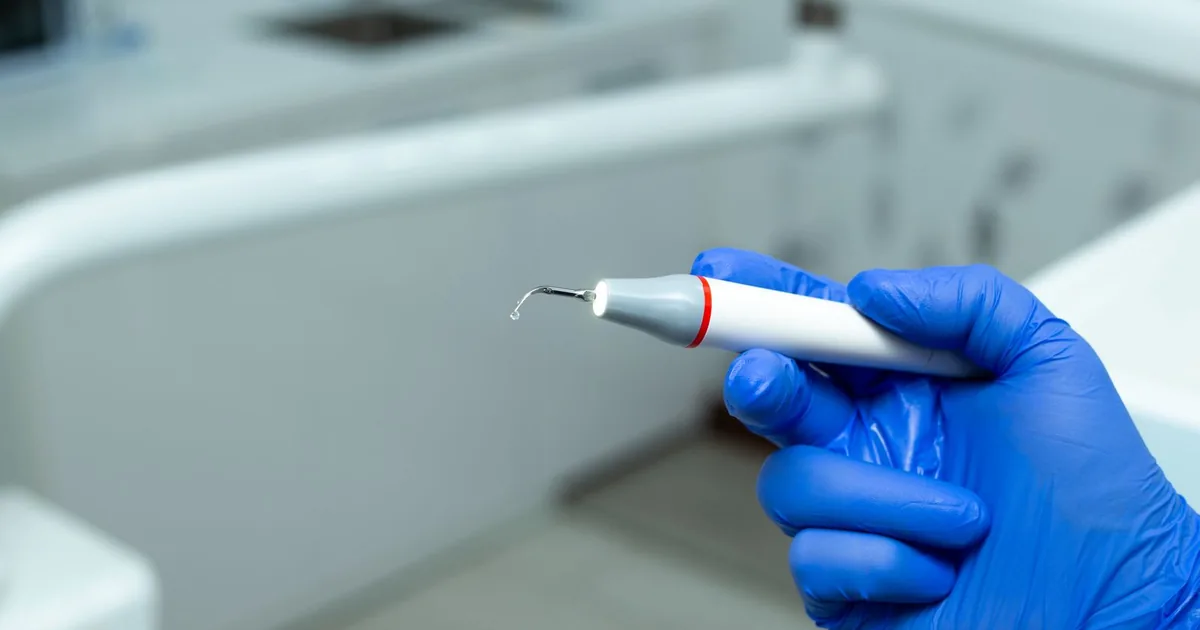
Deep cleaning goes further. The dentist or hygienist works below the gumline into the pockets that form when gums pull away from teeth due to infection. The instrument removes tartar deposits from the root surface itself — a process called root planing — so the gum can reattach to a clean surface and heal.
Deep cleaning typically takes one to two hours per session. Because more of the mouth needs to be treated, it is often split across two visits: one side at a time. Local anaesthetic is used.
The procedure itself is not usually painful because local anaesthetic is given beforehand. You will feel pressure and vibration but not sharp pain.
After the anaesthetic wears off — usually two to four hours later — the area feels tender and sore for one to three days. The gums may be swollen and bleed when you brush. This is normal and settles on its own.
Most people describe it as more uncomfortable than painful. Over-the-counter pain relief (ibuprofen or paracetamol, whichever your dentist recommends) handles the discomfort for the first day or two.
A single quadrant (one quarter of the mouth) takes 30 to 45 minutes. Most dentists treat two quadrants per visit, making each appointment 60 to 90 minutes. Two visits cover the full mouth. Some practitioners complete the full mouth in one longer session; this depends on the extent of disease and patient preference.
Common and expected:
Less common:
For the first 24 hours: soft, lukewarm food only. Soups, dal, curd, mashed vegetables, scrambled eggs, yoghurt, banana. Avoid chewing on the treated side if only half the mouth was done.
For the first week: avoid hard, crunchy, or sticky foods. Avoid anything that needs significant chewing pressure — dry roti, raw vegetables, hard biscuits, chikki, nuts.
Avoid: very hot or very cold food and drink (sensitivity is heightened for the first few weeks), alcohol, and carbonated drinks.
Do not eat immediately after the appointment — wait for the anaesthetic to wear off before eating, so you do not accidentally bite your cheek or tongue.
Yes — this is the whole purpose of the procedure. Once the root surface is free of tartar and bacterial deposits, the gum tissue can reattach to the tooth in a healthy relationship. Healing typically takes three to eight weeks. Your dentist will measure pocket depths at a review appointment six to eight weeks later to confirm improvement.
If gum pockets have not reduced enough by the review, additional treatment (further cleaning or, in severe cases, gum surgery) may be discussed.
If your teeth felt loose before cleaning, they are likely to feel firmer as gums heal and reattach over the following weeks. Teeth that felt solid and then seemed slightly loose immediately after cleaning usually tighten back up within a few weeks for the same reason.
Note: if teeth are loose because of advanced bone loss rather than gum swelling, the looseness may not fully resolve from cleaning alone.
Often, yes. Tartar is yellow or brown and can coat a significant area of the tooth surface. Removing it, combined with polishing at the end of the appointment, usually results in noticeably cleaner-looking teeth. This is not the same as whitening — the natural shade of the tooth hasn't changed — but the surface staining and discolouration from tartar is gone.
Warm salt water (half a teaspoon of salt in a glass of warm water) is widely recommended after dental procedures because it is gentle, reduces bacteria, and supports gum healing without the alcohol content found in many commercial mouthwashes. Alcohol-containing mouthwash can irritate freshly treated gum tissue.
If your dentist prescribes a specific antiseptic mouthwash (chlorhexidine is common), use that as directed. Salt water rinses are a good complement but not a replacement for prescribed rinses when given.
Initial soreness and bleeding settle within three to five days. Sensitivity may continue for two to four weeks. The gums begin visibly tightening and reattaching within two weeks. Full biological healing — the gum fully reattached and pocket depths at their new stable level — takes six to eight weeks.
Your dentist will assess progress at a review appointment. Most patients see a meaningful reduction in pocket depths and no bleeding on probing by six to eight weeks.
Signs that healing is progressing normally:
Signs that warrant a call to your dentist:
No — for patients with active or recently treated gum disease, three-monthly cleaning (called a maintenance visit) is standard practice. The bacteria that cause gum disease repopulate treated pockets within three to four months, so a cleaning schedule at that interval interrupts the cycle before disease can re-establish.
For patients with healthy gums and no history of gum disease, six-monthly cleaning is standard.
For most patients, a root canal is less painful during the procedure than expected, because modern anaesthesia is effective inside the tooth. Deep cleaning is similarly painless during the procedure but tends to cause more post-procedure soreness, because it affects gum tissue across a larger area.
In terms of recovery: root canal treatment typically causes one to two days of soreness in the tooth and surrounding area. Deep cleaning can cause three to five days of gum tenderness across the treated side, plus sensitivity for several weeks.
Neither procedure is as bad as its reputation suggests.
Tartar accumulates steadily on teeth where brushing does not reach. Over months and years it thickens, pushes below the gumline, and creates chronic infection in the gum tissue. This is gum disease — painless in its early stages and therefore often ignored.
Untreated gum disease leads progressively to bone loss around teeth, increasing looseness, and eventually tooth loss. It is also linked to systemic health conditions including cardiovascular disease, diabetes complications, and adverse pregnancy outcomes.
The problem with gum disease is that there are no obvious symptoms until significant damage has already occurred. Regular cleaning removes the driver of the disease before that point.
Yes, within limits. Gum disease — including cases where significant tartar has built up over many years — responds well to thorough cleaning when treatment begins early enough. Inflamed, bleeding gums can recover to a healthy state within weeks of proper treatment and improved home care.
What cannot be reversed: bone that has already been lost due to longstanding disease does not regenerate on its own. This is why early intervention produces far better outcomes than waiting. The earlier cleaning is done, the more structure can be preserved.
How painful is deep cleaning?
Painless during the procedure with local anaesthetic. The gums feel sore for two to four days afterwards, managed with standard over-the-counter pain relief.
What should I not eat after deep cleaning?
Avoid hard, hot, cold, or crunchy food for the first 24 to 48 hours. Soft, lukewarm food only — curd, soup, dal, mashed vegetables, banana. No smoking or alcohol during healing.
Do gums reattach after deep cleaning?
Yes. Once tartar is removed from the root surface, the gum reattaches over three to eight weeks. Pocket depths are reassessed at a six-to-eight-week review.
Do teeth look whiter after a deep cleaning?
Usually yes — yellow-brown tartar covering the tooth surface is removed, and polishing removes surface staining. The procedure does not change the natural shade of the tooth.
How long does deep cleaning take?
60 to 90 minutes per visit, typically across two visits to treat the full mouth. Each visit covers one side.
Is teeth cleaning every three months too much?
Not for someone with gum disease. Three-monthly maintenance cleaning is the standard schedule after gum treatment.
Which is more painful — root canal or deep cleaning?
Both are done under local anaesthetic. Deep cleaning typically causes more widespread post-procedure soreness because it covers a larger area of gum tissue.
What are the side effects of deep cleaning teeth?
Soreness for two to four days, gum bleeding that reduces over one to two weeks, cold sensitivity for two to four weeks, and temporary gaps between teeth as swollen gum tissue reduces to its healthy size.
Do gum pockets shrink after deep cleaning?
Yes. Most patients see significant pocket reduction by the six-to-eight-week review. How much they reduce depends on the initial depth and how well the treated area heals.
Can I eat immediately after deep cleaning?
Wait until the anaesthetic has worn off — usually two to three hours — before eating, to avoid biting your cheek or tongue.
Whether you need routine scaling and polishing or a full course of periodontal treatment, Kosmoss Dental carries out both at its clinic in Niti Khand I, Indirapuram, Ghaziabad. The clinic is led by Dr. Varnica Sharrma (BDS, MIDA) with over 20 years of clinical experience.
If your gums bleed when you brush, your teeth feel sensitive along the gumline, or you have not had a professional clean in more than a year, a consultation is the right starting point.
To book: call +91-9899986789.
Read more about scaling and polishing at Kosmoss Dental, or see if a root canal treatment is what you need if you have a painful or infected tooth.
This article is patient education and not medical advice. Every mouth is different — the right treatment plan is determined at a clinical examination.
Author
No tags available