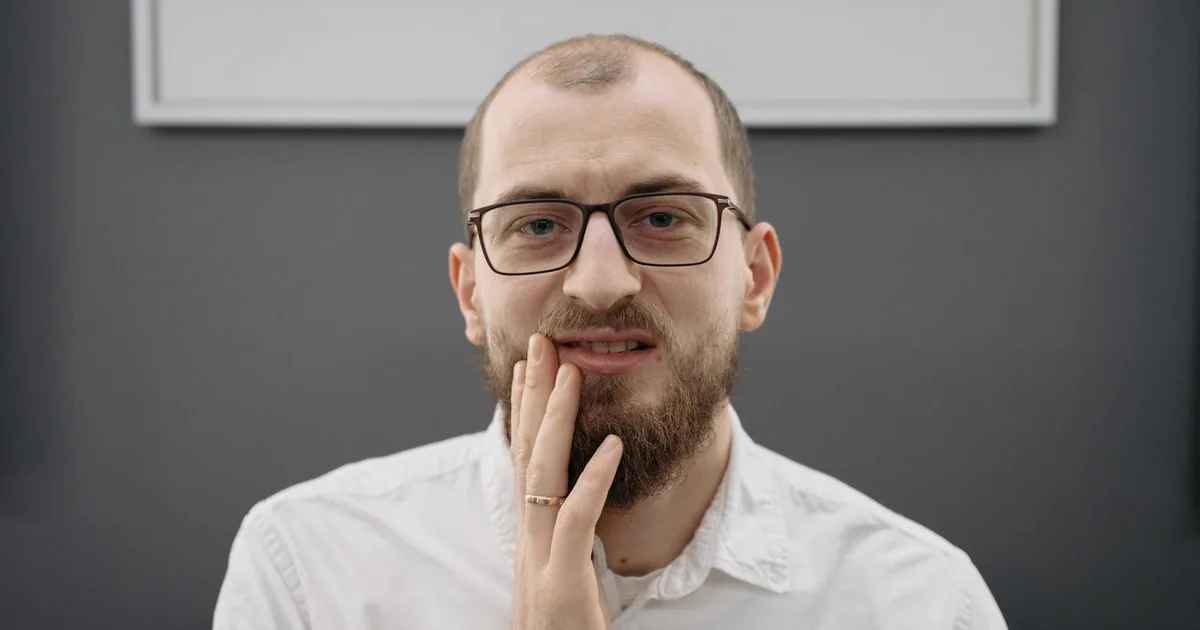
A tooth doesn’t break at a convenient hour. It happens at a birthday party when a child trips, during a late dinner when something hard hides in the rice, or at eleven at night when a dull ache you had been ignoring turns into something that owns the whole side of your face. In those first few minutes most people do one of two things: panic, or wait and hope it settles. What you do in that short window often decides whether a tooth is saved or lost, and whether you spend the night in pain or get some relief.
This is a plain guide to the dental situations that genuinely cannot wait, what to do in the moment, what to avoid, and when to pick up the phone. It is written for families in and around Niti Khand and Indirapuram, so the practical advice assumes you can reach a dentist the same day rather than a week later.
Not every dental problem is urgent, and treating a minor one as a crisis only adds stress. A chip you can feel with your tongue but that does not hurt, a bit of food wedged between two teeth, a mild twinge from cold water: these can usually wait for a normal appointment.
A few things should not wait. Bleeding that does not stop after fifteen minutes of pressure. Swelling in the face or jaw, especially if it is spreading or making it hard to open your mouth or swallow. A tooth that has been knocked completely out. Pain that no longer responds to ordinary painkillers and keeps you from sleeping. A knock to the mouth after a fall or an accident, particularly in a child. If you are reading this at night and any of that describes you, call us on +91-98999 86789. Our phone is answered late, so even outside clinic hours you can usually speak to someone and get told what to do next.
Of everything in this guide, this is the one where minutes matter most. If a permanent tooth is knocked clean out of its socket, it can often be put back and survive, but the chance of that drops with every half hour it spends dry and out of the mouth. The first thirty to sixty minutes are the ones that count.
Pick the tooth up by the crown, the white part you normally chew with. Do not touch the root, the pointed part that sat in the gum. If it has fallen in the dirt and looks grubby, rinse it gently in milk or in clean water for a second or two. Do not scrub it, do not use soap, and do not wrap it in a dry tissue, because the delicate fibres on the root that let it reattach die quickly when they dry out.
If you feel able to, slip the tooth back into its socket the right way round and bite gently on a clean cloth to hold it there. Many people cannot bring themselves to do this, and that is alright. The next safest thing is to keep the tooth moist in a cup of cold milk. Milk is close enough to the body’s own fluids to keep the root alive for a little while. If there is no milk, hold it inside the cheek so it sits in saliva, though only do this with an adult who will not swallow it. Plain water is the last resort and the least kind to the tooth. Then come straight to us, tooth and all.
One important exception. If it is a child’s baby tooth that has come out, do not try to put it back, because that can harm the adult tooth forming underneath. Keep the child calm, control any bleeding with gentle pressure, and call us so we can check that nothing else was injured.
Teeth break in all sorts of ways. A small corner chips off a front tooth and leaves a sharp edge. A molar that has quietly weakened over the years splits while you are eating. Sometimes an old filling takes a piece of the tooth with it. How urgent this is depends on how much broke and whether the nerve is exposed.
Rinse your mouth with warm water to clear away any fragments, and keep any larger pieces of the tooth in milk in case they are useful. If the area is bleeding, press a clean gauze or cloth against it until it stops. A cold compress held against the cheek from the outside eases swelling and takes the edge off the pain. If a sharp edge is cutting your tongue or lip, a small piece of sugar-free chewing gum or dental wax pressed over it is a reasonable stopgap until you are seen.
A tiny chip with no pain can wait a day or two. A larger break, a tooth that now hurts sharply with hot or cold, or any sign of the pinkish inner part of the tooth showing through needs attention quickly, because an exposed nerve gets infected and painful if it is left open. Avoid chewing on that side and leave any loose piece alone rather than wiggling it.
A knock does not always take a tooth all the way out. Sometimes it loosens one, or shoves it backwards, forwards or sideways so it no longer meets its neighbours properly. This counts as urgent, because a tooth left sitting in the wrong position can set that way and may lose its blood supply if it is not eased back and settled in time.
Leave the tooth where it is rather than wiggling it to test how loose it feels, since handling it repeatedly does more harm. If it has been pushed out of line you can try very gentle finger pressure to guide it back towards its normal position, but do not force it, and stop if it hurts sharply. Bite softly on a clean cloth to steady it, use a cold compress on the cheek, and keep to soft food. Then call us and come in the same day so we can reposition it properly and, where needed, splint it to the teeth on either side while it heals.
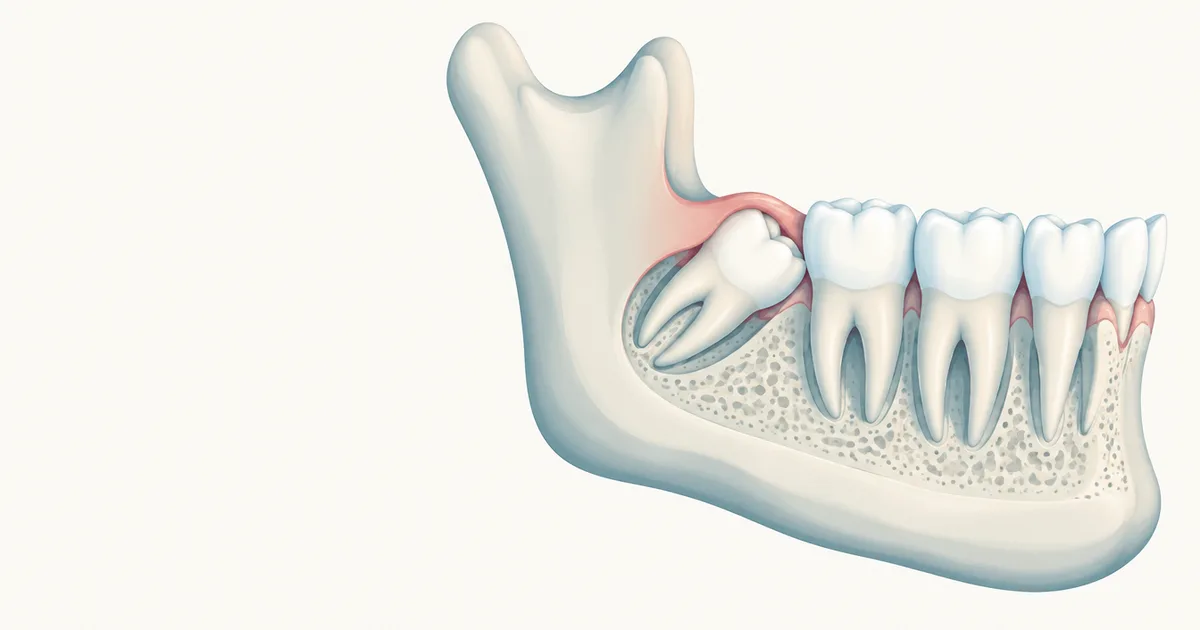
A toothache that builds over days and then arrives with swelling is the one people most often underestimate. The swelling usually means infection has spread beyond the tooth into the surrounding tissue, which is the body’s way of telling you the problem is no longer small. Swelling that reaches the eye, or that makes it hard to swallow or open your mouth, is a reason to be seen the same day without delay.
While you arrange to come in, you can take the painkiller you would normally use for a headache, at the dose on the packet, as long as you have no reason not to. A cold compress on the outside of the cheek helps. Rinsing gently with warm salt water a few times a day can ease the soreness and keep the area clean. What does not work, and what we see people try, is putting an aspirin or a clove directly on the gum, which burns the soft tissue and leaves a nasty ulcer on top of the original problem. Heat on the face is another one to avoid, because warmth encourages the swelling rather than settling it.
Antibiotics have their place here, but they are not a cure on their own and they are not something to buy over the counter and self-prescribe. The infection comes from inside the tooth, so it keeps coming back until the tooth itself is treated, usually with a root canal or, where the tooth cannot be saved, removal. If you have had courses of antibiotics for the same tooth more than once, that tooth is asking to be dealt with properly. A calmer explanation of what root canal treatment actually involves is in our guide on how to stop tooth pain at night.
A filling that falls out or a crown that lifts away while you are eating is uncomfortable and unsettling, though it is rarely a true emergency unless there is severe pain. The newly uncovered part of the tooth is often sensitive to air, cold and sweetness, which is normal and not a sign of disaster.
Keep the crown if you still have it, rinse it, and bring it with you, because a crown in good condition can sometimes be cemented back rather than remade. A chemist sells temporary dental cement, and a dab of it, or even a little sugar-free gum, can hold a crown in place for a day or two and shield the tooth. Do not use any household glue, which is harmful and makes the tooth far harder to treat afterwards. Chew on the other side, keep the area clean, and arrange to be seen in the next day or two so the tooth does not decay further while it is open.
The soft parts of the mouth bleed a lot, which makes a small cut look far worse than it is. A bitten tongue or lip, often alongside a chipped tooth after a fall, usually settles with simple first aid.
Clean your hands, then press a clean gauze or cloth firmly over the cut for fifteen minutes without lifting it to peek, because checking too soon disturbs the clot that is trying to form. A wrapped ice cube or a cold compress held gently against the area slows the bleeding and brings down swelling. If after fifteen minutes of steady pressure it is still bleeding freely, or the cut is deep or gaping, that needs proper attention, either with us or at a hospital if it is beyond the mouth. For children, a paediatric medical opinion is wise if the cut is large or you cannot settle the bleeding.
Children find the trouble that adults have learned to avoid, and a knock to the mouth is one of the commonest reasons families call us in a hurry. Fear makes it worse, so the first job is to stay calm yourself, because a child reads your face before they feel their own mouth.
For a knocked or broken baby tooth, do not try to replace it. Rinse the mouth gently, use a cold compress for swelling, and call us so we can check the adult tooth underneath is unharmed. For a bumped but still-present tooth, watch over the next few days for it darkening in colour or for a small pimple on the gum, both of which are worth showing us. A good habit, built before any emergency, is making the dentist a familiar and unfrightening place, which we write about in our guide to urgent and emergency dental care. A child who already knows the clinic copes with a crisis far better.
A denture that cracks or breaks is awkward but not dangerous. Resist the urge to glue it yourself with anything from the toolbox, because shop glues are toxic in the mouth and distort the fit so badly that a simple repair becomes a remake. Keep the pieces, manage without it for a day, and bring it in. If a sharp broken edge is rubbing the gum raw, leave the denture out until you are seen.
Food or an object wedged tightly between two teeth has a simple first move: careful flossing. Ease the floss down gently and work it out sideways rather than snapping it down hard, which can cut the gum. Never use a pin, a needle or anything metal to dig at it, because you can damage the gum or the tooth and turn a minor nuisance into a real problem. If gentle flossing does not free it and it stays sore, let us take it out for you.
You do not need anything elaborate, and having a few things ready turns a frightening moment into a manageable one. A clean gauze or two for pressure and bleeding. A packet of the painkiller your family uses, within date. A small container and the knowledge that milk is the right thing to carry a knocked-out tooth in. Temporary dental cement from the chemist for a lost filling or crown. And our number saved in your phone, +91-98999 86789, so you are not hunting for it one-handed at midnight.
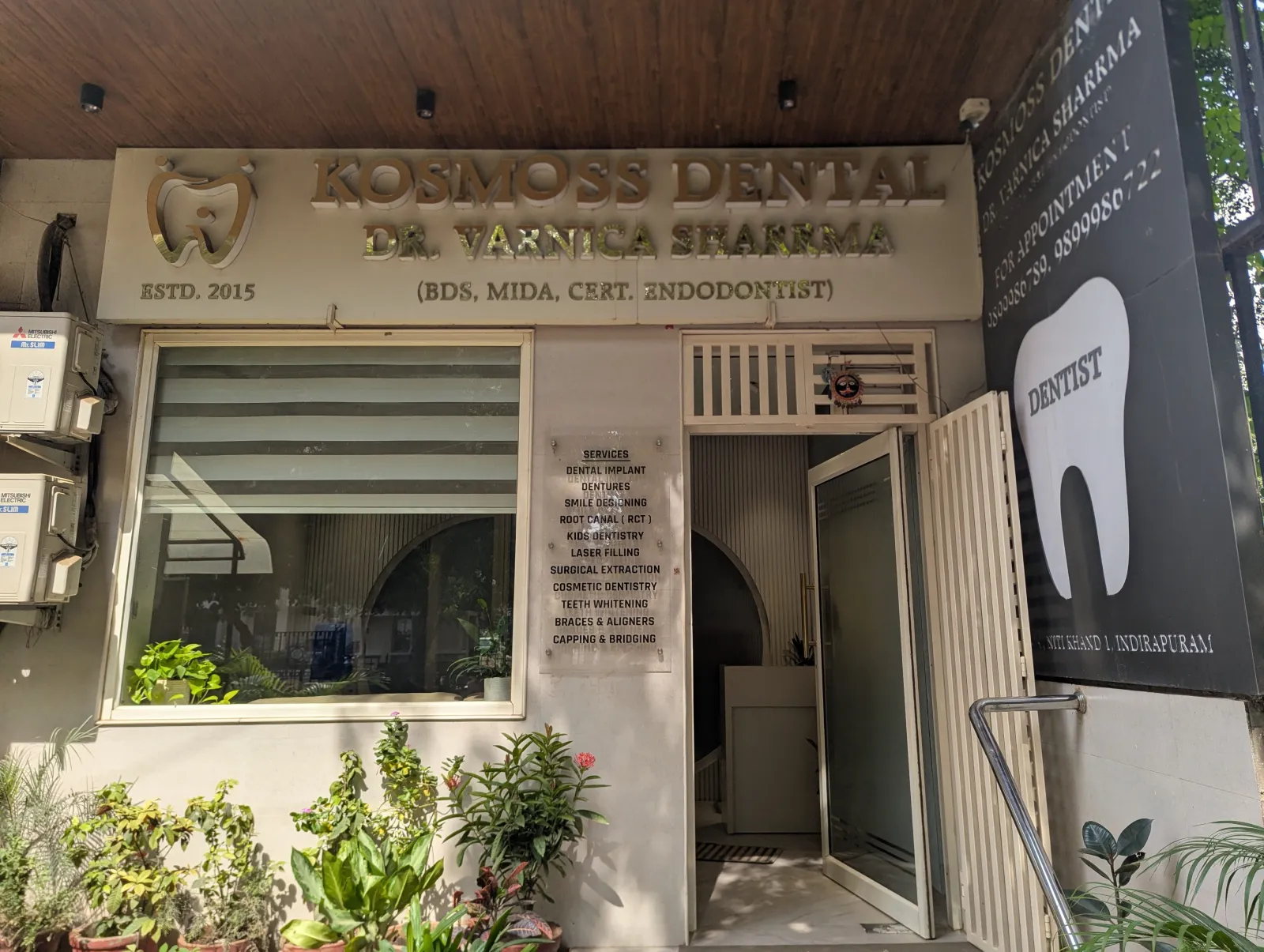
Kosmoss Dental sits at 769, Niti Khand I, Indirapuram, opposite ATS Gate No. 4 and next to Mithaas Sweets, which puts us within a short walk or a quick drive for most of Indirapuram. Our hours are Monday to Saturday from 10:00 to 20:30 and Sunday from 10:00 to 13:30, and because the phone is answered late into the evening, you can usually reach someone for advice and a same-day slot even when a problem lands at an awkward time. Call or message us on +91-98999 86789 before setting off, so we know what has happened and can have the right things ready when you walk in.
Dental emergencies are handled calmly here by our dentists, and where a tooth needs specialist root canal work, Dr. Varnica Sharrma, a certified endodontist, treats it. The aim in the moment is always the same: settle the pain, stop any bleeding, and give the tooth the strongest chance we can. If something has gone wrong in your mouth today and you are not sure how serious it is, that uncertainty is itself a good reason to call. It is far better to ring and be reassured than to wait and lose a tooth that could have been saved.
Author
No tags available
No previous post
1 of 22
Posts
Dental Health Reads
View all articles →