Yellow or stained teeth are one of the most common dental complaints. The internet is full of remedies — baking soda, lemon juice, Vaseline, activated charcoal, Korean whitening tricks — and most of them range from ineffective to mildly harmful. This guide cuts through the noise: what actually causes yellow teeth, what treatments work, what does not, and what to realistically expect from professional whitening.
Yes, in most cases — though how white depends on what is causing the yellowing.
Surface stains from tea, coffee, red wine, tobacco, and food pigments respond well to professional whitening. These stains are in or on the outer layer of the tooth (enamel) and can be significantly lightened.
Deeper discolouration — caused by antibiotics taken during childhood (tetracycline staining), fluorosis, or the natural yellowing that comes with age as enamel thins — is harder to treat and may not respond fully to whitening. In these cases, veneers are often a more effective option.
Yellow teeth that are healthy can almost always be improved. The question is by how much, which is why an examination is necessary before any treatment.
Several factors cause yellowing that has nothing to do with poor dental hygiene:
Enamel thinning with age. The outer enamel layer gradually wears thinner over the years, making the yellowish dentine underneath more visible. This is the most common reason teeth look more yellow in your 40s than in your 20s.
Diet. Tea, coffee, cola, red wine, and turmeric are the biggest culprits for staining. Even healthy foods like berries can cause surface staining over time.
Genetics. Some people naturally have slightly thicker or more opaque enamel; others have enamel that is naturally more translucent and shows the dentine colour beneath.
Certain medications. Antihistamines, antihypertensives, and some antipsychotics can cause tooth discolouration. Tetracycline antibiotics taken during childhood can cause grey or brown banding in adult teeth.
What deficiency leads to yellow teeth? Iron and calcium deficiencies can affect enamel development in children. In adults, the link is less direct — but vitamin D deficiency affects calcium absorption and can impair enamel mineralisation.
Natural teeth are not pure white — the dentine layer underneath enamel is yellowish, and healthy enamel is semi-translucent. A natural, healthy tooth colour is typically off-white to slightly cream or ivory. The very bright white seen in some whitening advertisements is not a natural tooth colour; it is achievable with veneers or very aggressive whitening, and not necessarily a sign of healthier teeth.
Unhealthy colours to watch for: grey (can indicate a dead tooth or internal bleeding), brown spots (decay or old fluorosis), black at the gumline (severe decay), and white spots (early demineralisation).
Baking soda. There is some evidence that baking soda toothpaste (not straight baking soda) removes surface staining because of its mild abrasive action. Used occasionally, it is safe. Used daily as a substitute for regular toothpaste, it can abrade enamel over time. Toothpastes containing baking soda as an ingredient are a safer way to get any benefit.
Oil pulling. No good clinical evidence that it whitens teeth. It is not harmful, but it is not a whitening treatment.
Activated charcoal. Abrasive. Some surface staining may be removed by the abrasion, but there is no evidence of any whitening effect beyond this, and repeated use risks enamel damage. Not recommended.
Lemon juice. This is one to avoid. Lemon juice is highly acidic and erodes enamel. Any whitening effect from the acid comes at the cost of permanently damaging the tooth surface, which worsens yellowing long term as enamel thins.
Vaseline on teeth. Does not whiten teeth. The idea that Vaseline creates a barrier against staining has no clinical evidence. It is harmless but ineffective.
Mixing toothpaste with baking soda or lemon. The lemon version is actively harmful (see above). The baking soda version is a milder abrasive — occasional use is unlikely to cause harm, but it is not a reliable whitening method.
How do Koreans whiten their teeth? Korean dental care emphasises regular professional cleaning, whitening toothpastes, and clinic-based whitening procedures — not fundamentally different from evidence-based dentistry elsewhere. The "Korean whitening secret" circulating online is mostly a marketing framing; the underlying treatments are professional cleaning and clinical whitening.
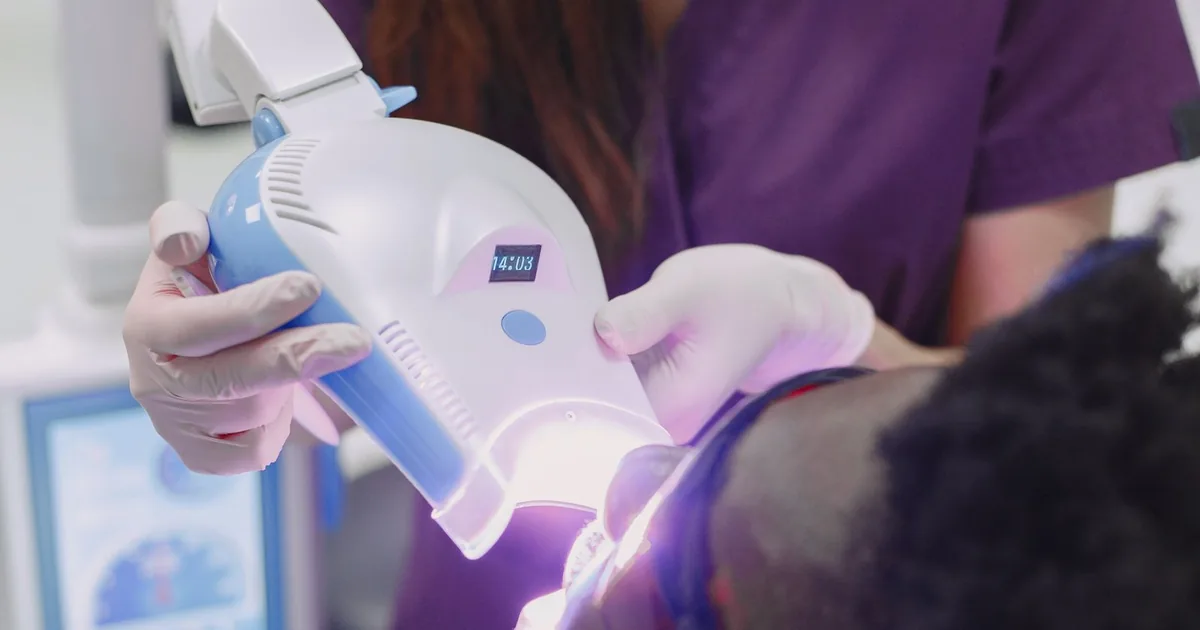
Professional in-clinic whitening, supervised by a dentist, is the safest and most effective method. The dentist:
Dentist-provided take-home kits — custom-fitted trays with a whitening gel — are the second-best option. They take longer (two to four weeks of nightly use) but are effective and supervised.
Over-the-counter strips and gels are available but use lower concentrations and produce more limited results. They are not harmful when used as directed, but the effect is modest.
Whitening agents work on natural tooth enamel and dentine. They do not change the colour of:
If you have visible crowns or fillings in your smile zone and want to whiten, discuss this with your dentist first. Whitening the natural teeth around them will create a mismatch unless the restorations are also replaced to match the new shade.
Teeth with severe tetracycline (antibiotic) staining, grey teeth from internal causes, and teeth with very thin enamel may not respond well to whitening. Veneers are typically the better option in these cases.
Yes. There is no age limit for teeth whitening. Older teeth often respond well because the main cause of yellowing is surface staining and enamel thinning — both of which whitening can address.
One consideration: older teeth are more likely to have existing restorations (crowns, fillings) that will not whiten, and to have thinner enamel that may be more sensitive during treatment. A dentist will adjust the treatment approach accordingly.
The same professional whitening methods used for any adult. Sensitivity is managed by using lower-concentration gels, shorter application times, and desensitising treatment before or after. The take-home tray method is often preferred for older patients because it allows more control over sensitivity.
Intrinsic stains — those inside the tooth structure — are the hardest to treat:
Extrinsic stains from food, drink, and tobacco respond well to professional whitening and cleaning.
You cannot stop enamel from thinning gradually, but you can slow staining significantly:
Cool-toned lipsticks with blue or purple undertones — berry, plum, rose, raspberry — make teeth appear whiter by contrast. Warm oranges and browns tend to emphasise yellow tones. This is not a dental treatment, but it is a practical cosmetic tip while whitening takes effect.
Can yellow teeth turn white again?
Yes, in most cases. Surface stains from diet and lifestyle respond well to professional whitening. Deeper discolouration from antibiotics or age may require veneers for a full result.
What home remedy actually whitens teeth?
Baking soda toothpaste has mild evidence behind it for surface stain removal. Lemon juice, activated charcoal, and Vaseline do not whiten teeth — and lemon juice actively damages enamel.
How long does professional whitening last?
Six months to two years, depending on diet and habits. Tea, coffee, and smoking cause faster restaining. Regular cleaning and occasional top-up treatment extend results.
Can lemon juice whiten teeth?
No — and it causes permanent enamel damage. The acid erodes the tooth surface, which worsens yellowing long-term.
Which teeth cannot be whitened?
Crowns, veneers, composite fillings, and implant crowns do not respond to whitening gel. Only natural tooth enamel and dentine are affected.
Can 60-year-old teeth be whitened?
Yes. There is no age limit. A dentist adjusts for sensitivity and existing restorations.
What deficiency leads to yellow teeth?
Calcium and vitamin D deficiencies can impair enamel mineralisation during development. In adults, diet and lifestyle habits are more commonly the cause of yellowing.
Why are my teeth yellow even though they are healthy?
Most commonly: enamel thinning with age (the natural colour of dentine shows through), dietary staining, or genetics. Yellow teeth are not always a sign of poor oral health.
What is the healthiest teeth colour?
Off-white to slightly ivory — not brilliant white. Pure white is not a natural tooth shade.
Can very yellow teeth become white?
Yes, with professional whitening — though the degree of improvement depends on the cause. A clinical assessment tells you what is achievable for your specific situation.
Kosmoss Dental offers professional in-clinic whitening and custom take-home kits at its clinic in Niti Khand I, Indirapuram, Ghaziabad. Dr. Varnica Sharrma (BDS, MIDA) assesses the cause of discolouration first and recommends the appropriate treatment — whether that is a professional clean, whitening, or something else.
To book a whitening consultation, call +91-9899986789.
Read more about teeth whitening treatment at Kosmoss Dental, or see scaling and polishing if you are not sure whether a professional clean might be all you need.
This article is general patient education and not medical advice. Results from whitening vary by individual; a clinical examination determines what is appropriate for you.
Author
No tags available