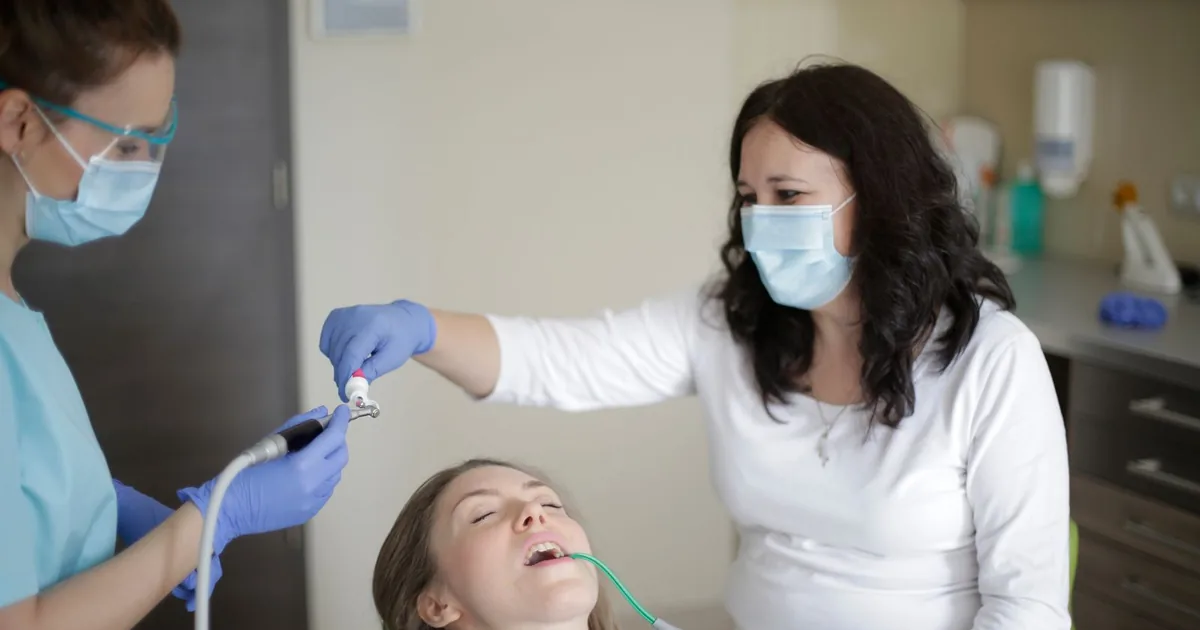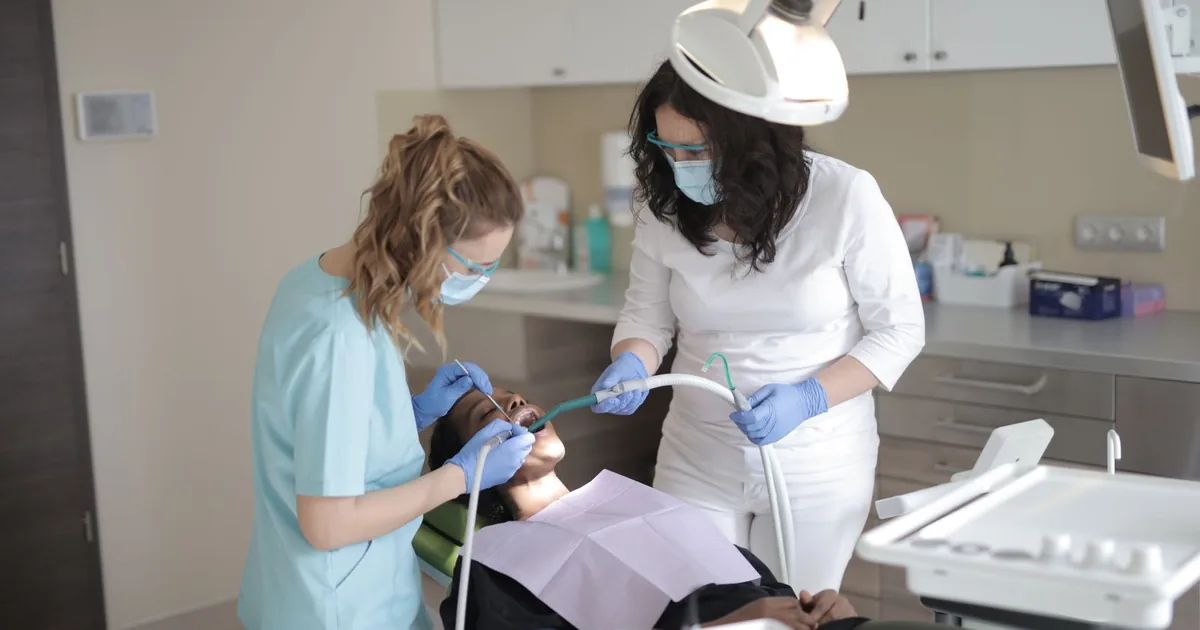
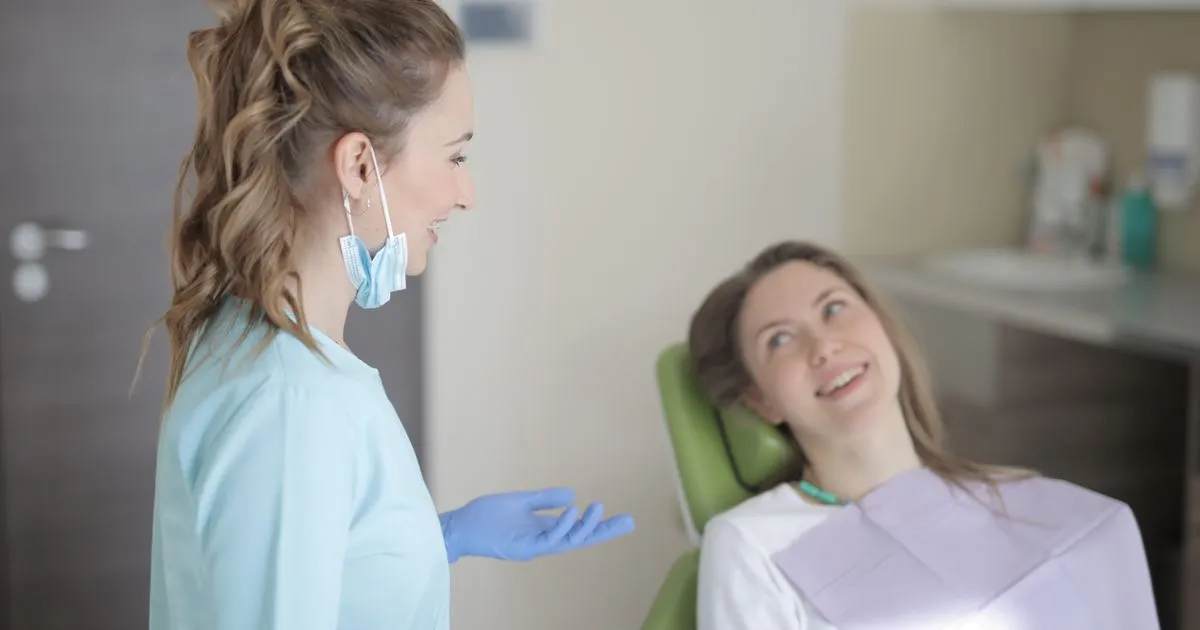
Indirapuram has a lot of dental clinics now — single-doctor setups on ground floors, multi-specialty centres in market complexes, chain clinics with branches across the city. If you are choosing one for the first time, or moving on from one that did not work out, the usual methods — a search, a signboard, a neighbour’s recommendation — tell you almost nothing about whether that clinic is actually right for your problem.
This is a plain, criteria-based way to evaluate any dental clinic in Indirapuram before you book: what the qualifications actually mean, how to judge experience, why pricing transparency matters, and the one question that tells you more about a dentist than almost anything else. None of it depends on knowing clinic names in advance — it works the same way whichever clinic you are looking at.
Every registered dentist in India holds a BDS (Bachelor of Dental Surgery) — that is the baseline, not a distinguishing feature. What separates a general dentist from someone qualified for your specific problem is postgraduate training and certification: an MDS in endodontics for root canals, in prosthodontics for crowns and dentures, in orthodontics for braces and aligners, or a certified implantologist for implant placement.
If you need a root canal, ask whether the dentist treating you is a certified endodontist, or a general dentist who also does root canals occasionally. Both are legally allowed to perform the procedure; only one has done the postgraduate training specifically for it. The same logic applies to implants, orthodontics, and paediatric dentistry. It is also worth checking that the dentist is registered with the Indian Dental Association (IDA) — a basic marker of standing in the profession, and one that is easy to ask about directly.
At Kosmoss Dental, for example, Dr Varnica Sharrma is a BDS graduate of Subharti Dental College, a Certified Endodontist and Implantologist — the kind of specific, checkable credential set worth asking any clinic for, not a claim unique to any one place.
“How long have you been practising?” is the question almost everyone asks, and it is a reasonable start — but it is not the whole answer. A dentist with fifteen years of experience doing mostly routine cleanings and fillings has not necessarily handled many complex root canals or implant cases. Experience only tells you something useful when it is experience in the procedure you actually need.
A more useful question is narrower: “How many root canals do you do in a typical month?” or “How many implants have you placed?” A dentist confident in their own numbers will usually answer directly. Vague answers, or a quick change of subject, are worth noticing.
Twenty-plus years in one location, treating the same kind of cases repeatedly, is a different thing from twenty years across several clinics doing a bit of everything. Both are “experienced” on paper; ask what the experience is actually in.
Getting bounced between clinics — one for a check-up, another for a root canal, a third for a crown — means your treatment history is scattered, and nobody has the full picture of your mouth. A clinic that can handle most of what a family needs under one roof — treating it directly, or coordinating with the right specialist itself when a case calls for one — saves you that fragmentation.
It is also worth asking what happens for things that are not done in-house. Imaging is a good test case: ask directly whether X-rays are taken on site, and what the process is for anything that needs to go to a diagnostic centre instead. A clinic that is upfront about this — “we take intraoral X-rays here, and for a full OPG we refer you to a diagnostic centre nearby and go through the images with you afterwards” — is telling you something honest about its scope. That is a more useful answer than a clinic that implies it does everything and then explains the gaps only once you are already in the chair.
A clinic confident in its pricing will give you a number, or a clear range, before treatment starts — not after. If a dentist cannot tell you roughly what a crown, a filling, or a cleaning costs until the work is already done, that is a fair reason to ask more questions or look elsewhere.
What a genuinely transparent estimate looks like: a breakdown by material or option, not one flat number that hides the choice being made for you. At Kosmoss Dental, for instance, the consultation is a flat ₹500, and a crown estimate is broken down by material rather than quoted as a single figure — a metal crown runs ₹3,500–₹4,000, a PFM (porcelain-fused-to-metal) crown ₹5,000–₹7,000, and a zirconia or E-max crown ₹10,000–₹15,000, with the difference explained rather than just priced. That is the level of detail worth expecting from any clinic quoting you a treatment: what the options are, what changes the price, and why one might suit your tooth better than another.
A clinic five minutes away that you will actually go back to beats one forty-five minutes away that looks slightly better online. This matters more than it seems, because very few dental treatments are one-visit affairs. A crown typically needs two appointments about a week apart. A root canal can run to two or three sittings. A child’s first few dental visits go more smoothly when they are short, familiar, and nearby rather than a production each time.
Before committing to a clinic for anything beyond a single check-up, think honestly about whether you will keep the follow-up appointments if the clinic is genuinely inconvenient to reach. A clinic in Niti Khand I or elsewhere in Indirapuram that is a short, realistic trip from home is not a minor convenience — it is often the difference between finishing a treatment plan and abandoning it halfway.
A toothache at 9pm, a crown that comes loose the morning of a flight, a child who chips a tooth playing — none of these wait for a two-week appointment slot. Before you need it, ask any clinic you are considering: what happens if I call in pain today, can you fit me in, and what do you do outside normal hours if it is genuinely urgent.
You do not need to have an emergency to ask this question. A clinic’s answer — confident and specific, or vague and non-committal — tells you a lot about how it is actually run day to day.
A 4.8 rating with two hundred one-line reviews posted in short bursts tells you less than a 4.3 rating with detailed, specific reviews spread out over months. Look for reviews that name a treatment, mention how long something took, or describe an actual interaction — those are harder to fake and more useful than generic praise.
Read a few negative reviews too, and see how the clinic responded. A clinic that engages with a complaint and explains its side is usually more trustworthy than one with no negative reviews at all, which is unusual for any clinic that has treated a meaningful number of patients over the years.
This is the single most telling thing to watch for, and it costs nothing to check at a first visit. A dentist who is confident and honest will show you the X-ray, explain in plain terms what is actually wrong, lay out the realistic options — including doing nothing for now, if that is genuinely an option — and let you decide, rather than starting treatment while you are still working out what happened.
A simple test question at any first appointment: “What happens if I don’t do this right now?” A dentist who answers that honestly, even when the honest answer is “nothing much, you can wait,” is telling you they are not treating you by default. That single answer is often a better signal than a clinic’s star rating, its signage, or how new the equipment looks.
To make these criteria concrete rather than abstract, here is how one Indirapuram clinic answers them — not as a claim that this is the only right answer, but as an example of what checking each point actually looks like. Dr Varnica Sharrma has practised in Indirapuram since 2015, holds a BDS from Subharti Dental College, is a Certified Endodontist and Implantologist. Consultations are a flat ₹500. Crown pricing is quoted by material, not as one number, with the ranges above explained before treatment. Intraoral X-rays are taken on site; a full OPG is referred to a nearby diagnostic centre and read through with the patient afterwards. The clinic is in Niti Khand I, Indirapuram.
Whichever clinic you are actually considering, the same questions apply. Ask them, listen to how specifically they are answered, and decide from there.
What are your qualifications for this specific treatment? Not just “are you a dentist”, but whether the person treating you has postgraduate training in the area you need.
How many of this procedure do you typically do? A narrower, more useful version of “how many years of experience.”
Can you give me a written or verbal estimate before we start? A number broken down by option, not a single figure handed over afterwards.
Is imaging done here, and what’s the process for anything that isn’t? Either answer can be fine — what matters is that it is stated plainly upfront.
What happens if I need to see you urgently, outside a normal appointment? A concrete answer beats “we’ll try to fit you in.”
Can you show me what’s wrong and walk me through the options? The single clearest test of whether a clinic explains before it treats.
Comparing clinics before choosing one is a sensible thing to do, not a sign of being difficult. These seven criteria — credentials for your specific problem, relevant experience, range of services, transparent pricing, realistic location, genuine emergency availability, and whether you get an explanation before treatment — travel with you to any clinic in Indirapuram you are weighing up. Ask them the same questions, and choose the one that answers plainly.
Author
No tags available