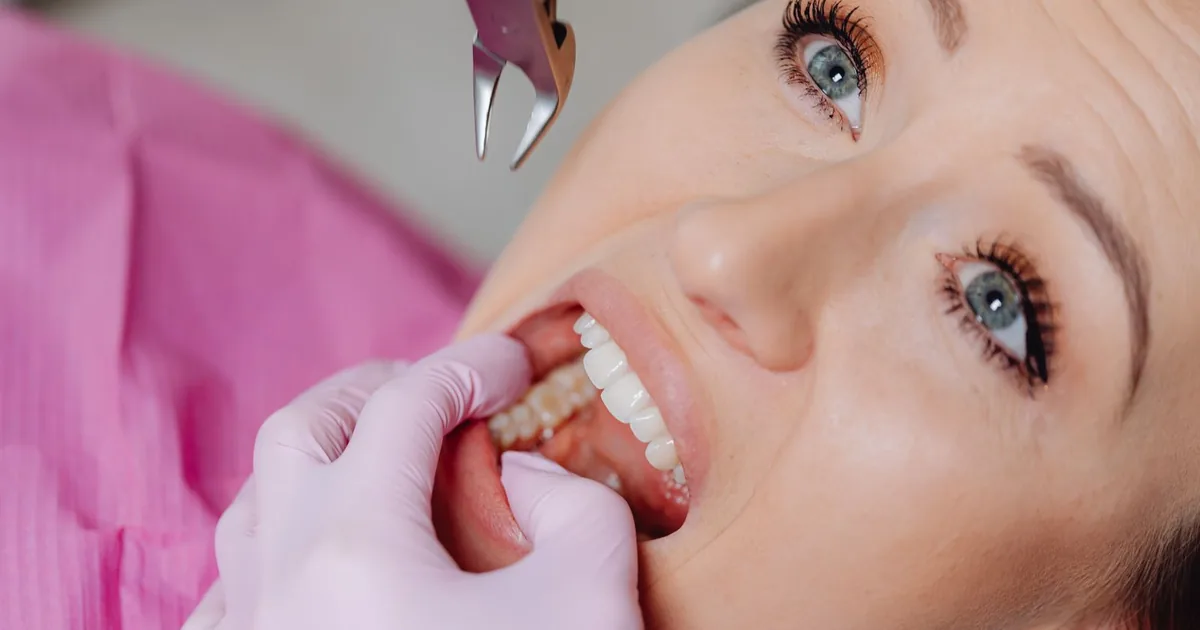
Tooth extraction is one of the most common dental procedures — yet it is also one of the most searched for in terms of what to expect, how much pain to prepare for, and how to recover quickly. This guide covers the procedure itself, the recovery day by day, what to eat, what to avoid, and when to call your dentist.
This is one of the most important questions in dentistry, and the answer for most cases is: a root canal.
The purpose of a root canal is to save a tooth that would otherwise need to be extracted. A natural tooth, even one that has had the nerve removed, is almost always preferable to an artificial replacement — it maintains the bone around it, does not require a replacement prosthesis, and functions naturally for decades.
Extraction is recommended when the tooth is too damaged to restore, when the bone loss around it is too advanced, or when there is insufficient tooth structure remaining to support a crown.
If your dentist says either procedure is viable, the root canal is generally the better long-term outcome. If the tooth cannot be saved, extraction followed by an implant or bridge is the standard next step.
Wisdom teeth (especially impacted ones) are the most commonly difficult extractions. Impacted wisdom teeth are partially or fully buried in the jaw, angled awkwardly, or have roots wrapped around adjacent structures. Surgical removal under local anaesthetic (sometimes sedation) is required.
Lower molars with curved or multiple roots can be challenging because the roots have less predictable anatomy and more bone surrounds them.
Teeth with very long, curved roots — common in upper canines — require more careful technique to avoid root fracture.
Brittle teeth with extensive decay or that have had previous root canal treatment can fracture during extraction, requiring more surgical work to retrieve the pieces.
Pain during extraction is controlled by local anaesthetic — if the anaesthetic is effective, no tooth should be painful during removal. Post-extraction pain varies by how complex the extraction was, not which tooth it was.
Surgical extractions (impacted wisdom teeth, broken roots, multi-rooted teeth requiring sectioning) cause more post-procedure soreness than simple, single-rooted extractions.
What hurts more, top or bottom tooth extraction? Lower teeth are generally slightly harder to anaesthetise completely because the nerve supply is different. Additional anaesthetic is sometimes needed. But with proper technique, both upper and lower extractions are painless during the procedure.
Day two or three. Day one is partly still numbed; the soreness builds as anaesthetic wears off and peaks around day two to three. After that it typically reduces steadily.
How many days should you rest after tooth extraction? Rest for 24 hours after a simple extraction. For a surgical extraction (impacted wisdom teeth), two to three days of reduced activity is advisable. Most people are back to normal activity within three to five days.
First 24 hours: Soft, cool food only. Yoghurt, curd, cold soup (not hot), ice cream, banana, scrambled eggs, mashed potato. No chewing on the extraction side.
Days 2 to 7: Soft food that requires minimal chewing. Khichdi, dal, soft roti, cooked vegetables, pasta, oats, paneer. Avoid hard, crunchy, or sharp-edged food (chips, raw vegetables, toast crusts) that can disturb the healing socket.
Avoid throughout healing: Alcohol, hot liquids for the first 24 hours, spicy food that can irritate the site, seeds that can get lodged in the socket.
Can you eat ice cream after tooth extraction? Yes — cold, soft food is ideal for the first day. The cold reduces swelling and the soft texture does not disturb the socket.
Yes. Warm salt water rinses from day two are standard aftercare. They reduce bacteria in the healing socket without the harshness of alcohol-based mouthwash. Rinse gently — swill and let the water drain out of your mouth, do not spit forcefully.
Your dentist may also prescribe a chlorhexidine mouthwash for the first week.
The surface of the gum closes over the socket within one to two weeks. The underlying bone takes longer — three to six months to fully remodel. By six months, there is typically no visible depression at the gum surface.
What happens if food gets in the extraction hole? Small amounts of food entering the socket in the first few days is common and usually not harmful — gentle salt water rinsing should clear it. If the socket becomes painful, swollen, or you can see food impacted in it, contact your dentist.
What do dentists put in the hole after tooth extraction? In most simple extractions, nothing — the blood clot that forms naturally is what promotes healing. In some cases (complex extractions, patients at higher bleeding risk), the dentist may place a dissolvable haemostatic material or sutures (stitches) in the socket to assist.
Dry socket (alveolar osteitis) occurs when the blood clot that forms in the socket is dislodged or dissolves before the bone beneath has healed. It exposes the bone to air, food, and bacteria.
Signs: increasing pain two to four days after extraction (not decreasing as expected), pain radiating to the ear or jaw, an empty-looking socket without a dark clot, bad taste or smell from the area.
It is more common in the lower jaw, in smokers, and after difficult surgical extractions. It is treated by the dentist cleaning and packing the socket with a medicated dressing, which dramatically reduces the pain within minutes.
The tooth has nerves inside it (in the pulp chamber and root canals). When the tooth is extracted, the entire tooth including those internal nerves comes out with it. The nerve supply to the area comes from larger nerves in the jaw that are not removed — these are what are anaesthetised before extraction and what return sensation to the area afterwards.
In a straightforward extraction, the entire root comes out with the tooth. If the root is fragile or shaped in a way that makes intact removal difficult, it can fracture during extraction. If this happens, the dentist will work to retrieve all the root fragments — leaving a root fragment in the socket can cause infection and complications.
What happens if a dead tooth root is left in the gums? A retained root fragment can cause chronic infection, pain, or interfere with healing. It should be removed — your dentist will confirm via X-ray whether the extraction was complete.
A natural tooth maintains the bone around it through function. When a tooth is removed, the bone in that area begins to resorb (shrink) over the following months and years. This has consequences: the adjacent teeth may drift or tip, the opposing tooth may over-erupt, and future implant placement may require bone grafting.
A saved tooth — even one that has had a root canal and a crown — generally produces a better long-term outcome than an artificial replacement. This is why the dental profession prioritises saving teeth whenever possible.
Which is better — root canal or extraction?
Root canal, in most cases — a saved natural tooth is almost always preferable to a replacement. Extraction is recommended only when the tooth cannot be saved.
What is the worst day after tooth extraction?
Day two or three. Pain peaks then and reduces from there.
What should I eat after tooth extraction?
Soft, cool food for the first day — yoghurt, ice cream, banana, mashed potato, soup. Avoid hard, hot, crunchy, or spicy food on the extraction side for the first week.
How long does the hole take to close?
The gum surface closes within one to two weeks. The bone beneath remodels over three to six months.
Does salt water help healing?
Yes. Warm salt water rinses from day two reduce bacteria and support healing.
What not to do after tooth extraction?
No straws, no smoking, no forceful rinsing for 24 hours, no strenuous exercise for 24 to 48 hours, no hard food on the extraction side.
What is a dry socket?
A painful complication where the blood clot dislodges, exposing bone in the socket. Signs include increasing pain from day two onwards. Treated by the dentist with a medicated dressing.
How many days rest after tooth extraction?
24 hours for simple extractions. Two to three days for surgical/wisdom tooth extractions.
What are signs the extraction is healing well?
Reducing pain day by day, clot visible in socket, swelling reducing after day three, no bad smell or taste from the site.
Kosmoss Dental performs both simple and surgical extractions at its clinic in Niti Khand I, Indirapuram, Ghaziabad. If you have a painful or infected tooth, a consultation determines whether it can be saved with a root canal treatment or needs to be removed — and if removed, what the options are for replacement, including dental implants.
To book: +91-9899986789.
Patient education — not medical advice. Extraction difficulty, recovery, and replacement options vary by case; a clinical examination and X-ray are needed before any recommendation.
Author
No tags available