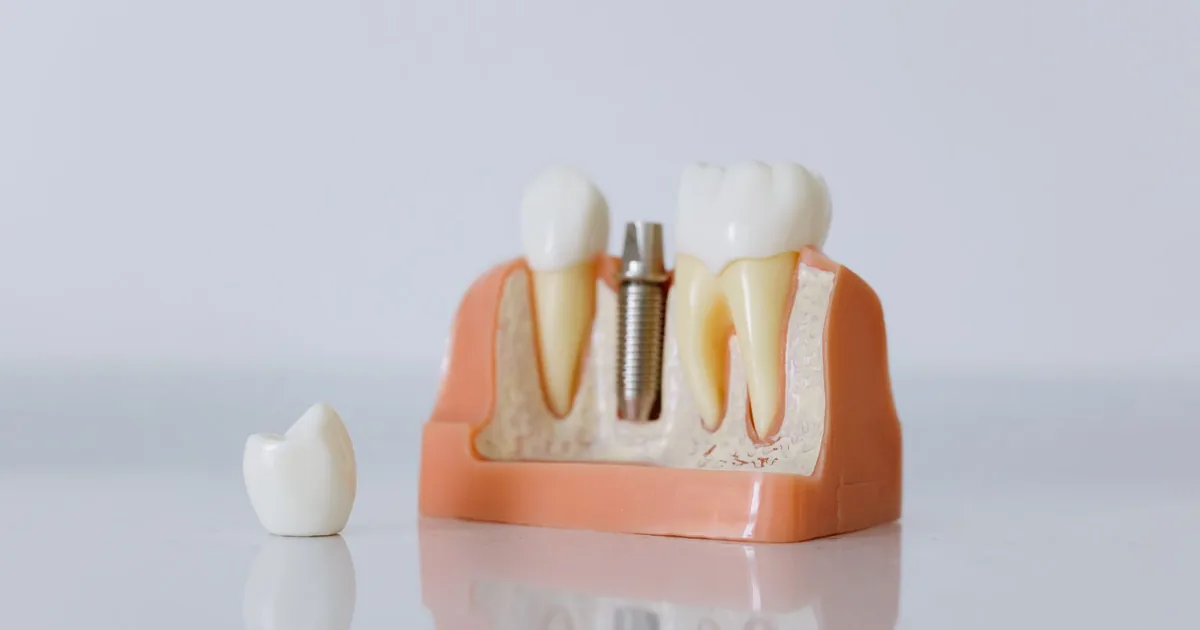
A dental implant is a titanium screw placed into the jawbone to replace the root of a missing tooth. A crown is attached on top, creating a replacement tooth that looks, feels, and functions like a natural one. Implants are the longest-lasting tooth replacement option available — but they involve surgery, a healing period of several months, and a significant upfront cost.
If you are considering implants, or have been recommended them by a dentist, here is a complete account of the procedure, the risks, the recovery, and what questions to ask before committing.
Implant costs vary significantly based on the type of implant system, the brand, the complexity of your case, and whether additional procedures (bone grafting, sinus lift) are needed.
Typical ranges in Ghaziabad and NCR:
| What is included | Approximate range |
|---|---|
| Single implant (implant + abutment + crown) | ₹25,000 – ₹60,000 |
| Implant with bone graft | ₹40,000 – ₹80,000 |
| Full-mouth implants (All-on-4 type) | ₹2,50,000 – ₹6,00,000+ |
These are indicative ranges only. An exact estimate is given after examination and a CT scan (CBCT), which assesses bone volume and density — the key factors determining whether an implant is straightforward or complex.
Always ask what the quote includes: the implant fixture, the abutment (connector), the crown, the surgical fees, and the follow-up visits should all be itemised.
The surgery itself is done under local anaesthetic and is not usually painful during the procedure. Pressure and vibration are felt, but not sharp pain. Most patients report being surprised by how manageable it is.
After the anaesthetic wears off — usually two to four hours later — the area becomes sore. The most painful day after dental implant surgery is typically day two or three, not day one (which is still partly numbed). After day three, discomfort usually reduces steadily.
Over-the-counter pain relief (ibuprofen and paracetamol as directed by your surgeon) is sufficient for most patients. Prescription pain relief is rarely needed.
For most patients: the waiting, not the surgery. The implant must fuse with the jawbone (osseointegration) before the final crown can be placed. This takes three to six months. During this period you have either a temporary tooth or a gap, and you are waiting. The surgery itself is typically less difficult than expected.
Patients with low bone density or who need bone grafting have a more extended process and more post-surgical discomfort than a straightforward single implant.
The implant fixture (the titanium screw) is designed to be permanent and typically lasts the patient's lifetime. The crown on top is more like a natural tooth crown — it can chip, crack, or wear over time. Most implant crowns last 15 to 25 years with good care before needing replacement.
At 20 years, a well-maintained implant should still be functional. The bone around it should remain stable as long as oral hygiene has been maintained. Bone loss around implants (peri-implantitis) is the main long-term risk, and it is related to oral hygiene habits and smoking history.
Peri-implantitis — infection and inflammation of the gum and bone around the implant — is the most common long-term complication and the main cause of late implant failure. It is directly related to oral hygiene. An implant that is not brushed and maintained like a natural tooth accumulates bacterial deposits that cause bone loss, loosening, and eventually implant failure.
Early failure (within the first few months, before osseointegration completes) is less common and usually related to:
The overall success rate of dental implants is 95–98% at 10 years in non-smokers with sufficient bone and no uncontrolled systemic conditions. The failure rate is around 2–5%.
Smokers have a significantly higher failure rate — some studies put it at 2–3 times higher than non-smokers. The bone does not fully reject the implant the way a body might reject an organ transplant; instead, integration simply fails to complete.
Older age alone is not a disqualifying factor. There is no upper age limit for implants as long as bone density and general health are adequate.
The surgical site heals within one to two weeks. But osseointegration — the implant fusing with the jawbone — takes three to six months. During this time the implant is left undisturbed (or with a temporary restoration on top).
How many days should you rest after a dental implant? Most patients return to desk work within one to two days. Physical exertion and exercise should be avoided for five to seven days, as increased blood flow can disrupt healing. Eating on the implant side should be avoided for the healing period.
Do:
Do not:
How to sleep after a dental implant: Sleep with your head slightly elevated — an extra pillow under your head. Avoid sleeping on the side of the implant for the first few days.
Wait until the anaesthetic has worn off. Once it has, soft, cool food only — ice cream, yoghurt, soup (not too hot), mashed banana. Nothing that requires chewing pressure near the implant. No hot food or drink for the first 24 hours.
Can you eat ice cream after dental implant surgery? Yes — cold, soft food is actually ideal for the first 24 hours. The cold reduces swelling.
Can you bite an apple with implants? Once fully healed and the final crown is placed, yes. A well-integrated implant with a good crown can handle normal eating. Hard foods (ice, very hard crusts) should be treated with care, the same as with natural teeth.
Yes. Warm salt water rinses (half a teaspoon of salt in a glass of warm water) from day two onwards are standard aftercare. They reduce bacterial load in the healing area without the harshness of alcohol-based mouthwash. Your dentist may also prescribe a chlorhexidine rinse for the first week or two.
The first 24 to 48 hours: swollen, bruised, and the gum tissue around the implant site is tender. Some bleeding from the site is normal.
By day three to five: swelling peaks and then begins to reduce. The gum edges around the implant are visibly healing.
By two weeks: the gum looks largely normal. There may be a small healing cap visible if a two-stage implant approach was used.
Over the following months: the gum contours around the implant site gradually settle into their final shape as the tissue matures.
Once the integration period is complete (typically three to six months), your dentist takes impressions or a digital scan of the implant and the surrounding teeth. A custom crown is fabricated — usually in one to two weeks — and then attached to the implant via an abutment. That appointment is the final step. Ongoing care is the same as for natural teeth: brush, floss, and attend regular check-ups.
Often, yes. Options during the healing period include:
Yes. There is no time limit after extraction beyond which an implant becomes impossible. However, bone resorption (the jaw bone gradually reducing in volume after a tooth is lost) continues over time. The longer the gap, the more likely a bone graft is needed before or alongside implant placement. This adds time and cost.
Getting an implant earlier means more available bone. But the procedure is still viable years after extraction with appropriate planning.
Which is better for you depends on the location of the missing tooth, the health of adjacent teeth, bone volume, and budget. A consultation covers these options with specific reference to your situation.
What is the estimated cost of a dental implant in Ghaziabad?
₹25,000 to ₹60,000 for a single implant including the crown, depending on the implant system and complexity. Cases requiring bone grafting cost more. An exact figure is given after examination and a CBCT scan.
How painful is a dental implant?
The surgery is done under local anaesthetic — painless during the procedure. Post-surgery soreness peaks around day two or three and reduces from there. Most patients manage with standard over-the-counter pain relief.
What is the main cause of dental implant failure?
Poor osseointegration due to smoking, uncontrolled diabetes, infection, or insufficient bone. Long-term, peri-implantitis (infection from inadequate oral hygiene around the implant) is the leading cause of late failure.
What happens after 20 years of dental implants?
The implant fixture typically lasts a lifetime. The crown may need replacement after 15–25 years. Ongoing bone maintenance depends heavily on oral hygiene and the absence of smoking.
Who should not get dental implants?
Active smokers, patients with uncontrolled diabetes, those with insufficient bone who decline grafting, patients on certain bone-metabolism drugs, and patients under 18. Older age alone is not a disqualifying factor.
How many days should I rest after implant surgery?
One to two days for desk work. Avoid vigorous exercise for five to seven days.
Can I get an implant years after extraction?
Yes. More time since extraction increases the likelihood of needing a bone graft, but it does not preclude implant placement.
What is the best alternative to a dental implant?
A dental bridge (fixed) or removable partial denture are the main alternatives. Each has trade-offs in terms of adjacent tooth impact, stability, and longevity.
Kosmoss Dental places dental implants at its clinic in Niti Khand I, Indirapuram, Ghaziabad. A consultation includes an examination, a discussion of suitability, and a clear cost breakdown before any treatment begins.
To book a consultation: call +91-9899986789.
Patient education — not medical advice. Implant suitability, procedure, and cost vary by individual case; a clinical assessment is necessary before any recommendation can be made.
Author
No tags available